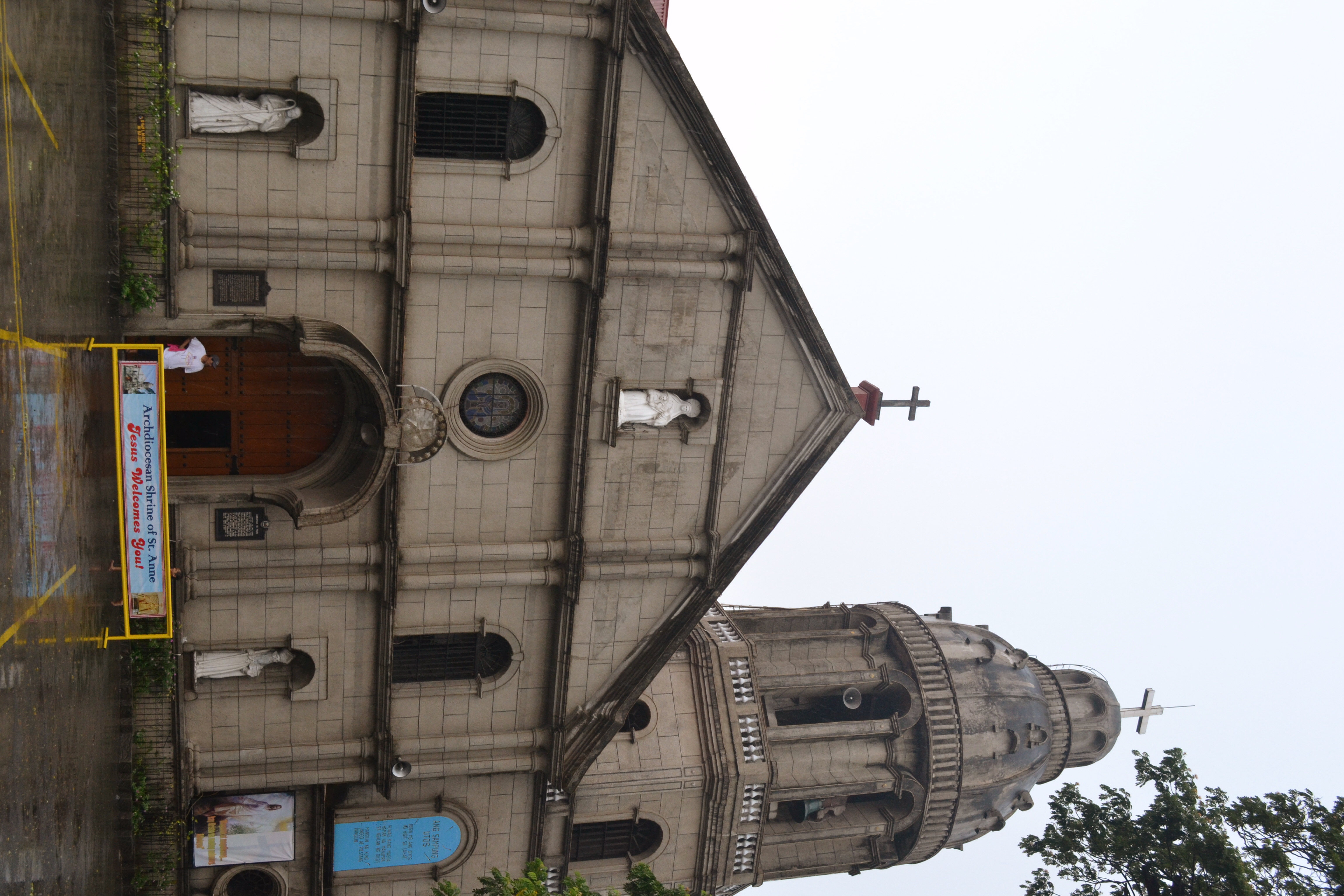
 Sta. Ana Church: A Living Piece of Taguig’s Soul
Tucked along the banks of the Taguig River, the Minor Basilica and Archdiocesan Shrine Parish of Saint Anne—or simply Sta. Ana Church to the locals—is one of those places that quietly carries centuries of stories within its walls. Most people in Taguig just call it the “Taguig Church,” and for good reason: it’s been the spiritual heart of the city for over 430 years. Today, it holds the proud distinction of being the very first basilica in the Diocese of Pasig.
Where to Find It
You’ll find the church at 41 Liwayway Street in Barangay Santa Ana, Taguig City. It sits right beside the Taguig River, just across Plaza Quezon, where a statue of former President Manuel L. Quezon still stands—a marker placed during his own time in office. There’s something fitting about its location: a church that has watched the river, the town, and the country itself change over the centuries.
A Brief Walk Through Its History
How It All Began (1587)
The story starts in 1587, when Augustinian friars established the parish and placed it under the patronage of Saint Anne. This was around the same time Taguig was carved out as an independent town from the old province of Tondo. To give a bit more context: the Spaniards had already taken control of mainland Luzon back in 1571 through the Legazpi expedition, and by 1582 to 1583, Taguig had been folded into the Encomienda del Tondo under a certain Captain Vergara.
The first version of the church wasn’t much—just a humble temporary chapel put up by Fr. Hernando Guerrero, O.S.A. But as more and more locals came to worship, he eventually oversaw the construction of a sturdier, larger concrete church.
Knocked Down, Built Back Up
Like a lot of old Philippine churches, Sta. Ana has been through it. Earthquakes, war, weather—you name it. Here’s a quick rundown of the major moments:
– **1645 Luzon Earthquake** – A massive quake near Taal Volcano caused serious damage to the church, and repairs followed.
– **18th Century** – The building stayed as an adobe-and-brick structure, patched up bit by bit over the decades.
– 1848 – A full rebuild took place.
– 1883 – Work on the current church started under Patricio Martin, though he sadly passed away before seeing it finished.
– 1896 – His successor, Guillermo Diaz, picked up where he left off and completed the restoration.
– American Period – The Augustinians eventually handed over the reins to secular priests from the Archdiocese of Manila.
– World War II – Many Taguigeños still believe St. Anne herself interceded to help liberate the town from Japanese occupation. It’s a story passed down through generations.
– 1987 – The exterior got a facelift in time for the church’s 400th anniversary.
Becoming a Minor Basilica (2022)
On **July 26, 2022**—the feast day of Saints Anne and Joachim, of all days—the Vatican officially elevated the church to the rank of Minor Basilica. It was a huge moment for the parish and for Taguig as a whole, since this made Sta. Ana the very first basilica within the Diocese of Pasig.
A Treasured Heritage Site
In 2023, the recognition kept coming. The church was declared an Important Cultural Property and a National Historical Landmark—formal acknowledgments of just how much history is packed into this single site.
The Architecture
Sta. Ana Church is a fine example of **barn-style Baroque architecture**. Its design is clean and balanced, with clearly defined vertical and horizontal sections crowned by a simple triangular pediment. There’s no flashiness here—just an honest, dignified beauty that has somehow held up through earthquakes, wars, and the relentless passing of time.
The Simborio: A Quiet, Curious Landmark
If you wander around the church grounds, you’ll come across the **Simborio**, the old funerary chapel that sits within the parish’s historic cemetery. It’s one of the most fascinating parts of the complex:
– It was built sometime in the **1700s**, reportedly using Filipino forced labor—a sobering reminder of the colonial era.
– The structure is made of tiles and stone walls.
– It measures about **12 meters (39 feet) in diameter**.
– A small cross caps the dome.
– The ground level was traditionally used as a repository for bones.
– It received minor repairs in **1980 and again in 1993**.
There’s something almost haunting about the Simborio—small, weathered, and beautiful in a melancholy way.
Other Things Worth Noticing
The churchyard itself is wide and open, and these days it doubles as a parking area for visitors. But the real showstopper outdoors is the **massive century-old Acacia tree** standing watch over the grounds. It’s the kind of tree that makes you stop and just look for a moment.
Museo de Sta. Ana
Right next to the church is the **Museo de Sta. Ana**, a small but meaningful museum that holds religious relics and artifacts tracing Taguig’s religious heritage all the way back to **1857**. If you’re the type who likes to slow down and really understand a place, it’s well worth a visit.
About the Patroness, Saint Anne
The church is dedicated to **Saint Anne**, the mother of the Virgin Mary and grandmother of Jesus Christ—according to the Gospel of James. Locally, she’s deeply loved, and many devotees still credit her intercession for protecting Taguig during the dark days of World War II.
The Festivals That Bring It All to Life
Sta. Anang Banak — The Taguig River Festival (July 26)
Every July 26, the church teams up with the City Government to celebrate the **Sta. Anang Banak Taguig River Festival**, a colorful fluvial parade in honor of the town’s beloved patroness. It’s a sight to see: