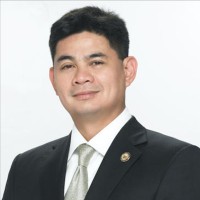
Sigfrido “Freddie” Rodriguez Tiñga is a Filipino politician and businessman best known for serving as Mayor of Taguig from 2001 to 2010, then as Taguig’s 2nd district representative from 2010 to 2013. He is also the founder and president of Global Electric Transport, and he comes from a prominent legal-political family as the son of former Supreme Court Associate Justice Dante Tiñga.
Early life and education
Tiñga was born on April 16, 1965, in Pasay, Rizal, Philippines. He earned a BS from the University of the Philippines Diliman in 1986 and later completed an MBA at the University of Oregon’s Charles H. Lundquist College of Business from 1989 to 1991.
Career before politics
Before becoming mayor, Tiñga worked in private-sector and consulting roles, including SGV & Co., Andersen Consulting, Siemens-Nixdorf Philippines, Citibank Philippines, The Livelihood Center, First Pacific/Fort Bonifacio Development Corporation, and K2 Interactive, which he co-founded in 1999.
Mayor of Taguig
He was elected mayor in 2001 and served three terms until 2010. During his tenure, Taguig pursued cityhood, and after the city’s conversion was upheld, he emphasized investment attraction and tax reforms to help Taguig grow into a premier city.
Notable work
Contemporary accounts credit his administration with infrastructure and service programs, including health, education, youth and sports, peace and order, housing, environment, and employment initiatives. One profile also highlighted the city’s “Forward Taguig” branding during his mayorship.
Congress and after politics
In 2010, Tiñga was elected to the House of Representatives for Taguig’s 2nd district. He served one term and did not seek reelection in 2013, later returning to business.
Personal life
Tiñga married Kaye Chua in 1994, and they have four children. Public profiles also place him in Taguig and describe him as a business executive as well as a politician.
Context in Taguig history
Tiñga’s name is closely tied to Taguig’s transition from municipality to city, which became official in 2004 after a recount and subsequent government action. Reporting from the period shows that his administration framed cityhood as a launch point for wider development and investment.
What were the key achievements of his Ten-Point Program in Taguig
His Ten-Point Program is described as a broad city-building agenda that focused on health and social services, education, youth and sports, peace and order, housing and shelter, a clean-and-green environment, infrastructure, employment, government services, tourism, and civic pride.
Key achievements
Taguig implemented large-scale infrastructure work, with one profile crediting the administration with 740 infrastructure projects.
The city expanded health access, including universal insurance efforts and more than 7,800 poor residents receiving health cards.
Education remained a priority, with efforts to support the city’s 52 schools and improve classroom space and educational quality.
The program also included scholarships and school support such as free bags, school supplies, and uniform textile for students.
Taguig developed visible public-service projects such as the Taguig City Hospital, Taguig Science High School, Taguig College University initiatives, the Lake Shore Road Dike, the Taguig Citycard, Water Lily Livelihood, and Serenity Memorial Park.
The administration framed Taguig’s growth around stronger civic identity and a push to make the city a premier urban center by 2020.
Why it mattered
The program’s impact was not just individual projects, but the way it helped reposition Taguig as a more progressive, investable, and city-branded local government unit after cityhood. Reporting from the period links these efforts to Taguig’s broader transformation into a more cosmopolitan and economically active city
Tiñga’s role in Taguig’s cityhood via RA 8487 in 2004
Tiñga’s role was that of the mayor who campaigned for, implemented, and publicly defended Taguig’s move to cityhood after the 2004 plebiscite ratification of RA 8487. He presented cityhood as a major milestone for Taguig and framed it as part of his broader vision of turning the city into a premier urban center.
What RA 8487 did
Republic Act No. 8487 originally converted the Municipality of Taguig into a highly urbanized city, and the law noted that boundary disputes with adjoining LGUs would still be resolved by the proper forum. In 2004, the COMELEC issued a resolution confirming the ratification of Taguig’s conversion after the plebiscite recount showed approval by residents.
Tiñga’s role
He was the local executive who led Taguig during the cityhood push and helped carry the campaign forward.
He welcomed the legal confirmation of cityhood and treated it as a turning point for Taguig’s development.
Accounts of the period credit him with pushing a reform agenda that made cityhood part of a larger modernization effort for Taguig.
Important nuance
RA 8487 was enacted in 1998, so Tiñga did not author the law itself; his role was in the political campaign, administration, and legal follow-through that helped make the cityhood a reality in 2004. In other words, he was a key implementer and champion of Taguig’s cityhood, not the legislator who passed the statute.
What role did Tiñga play in securing Fort Bonifacio for Taguig
Tiñga’s role was mainly political and legal: as Taguig mayor, he backed and defended the city’s claim to Fort Bonifacio in the long-running boundary dispute with Makati, and his administration treated that claim as central to Taguig’s development agenda. The city itself later won in court, with the Supreme Court ruling that the disputed Fort Bonifacio areas belong to Taguig.
What he did
He led Taguig during the period when the city was asserting jurisdiction over Fort Bonifacio and the surrounding disputed areas.
He publicly welcomed and supported court rulings that strengthened Taguig’s cityhood and territorial position.
His administration used the Fort Bonifacio claim as part of Taguig’s broader growth strategy, especially once BGC became a major development area.
What he did not do
He did not personally “win” Fort Bonifacio alone; the outcome came through a long legal battle involving the city government, courts, and many years of litigation after his tenure as mayor.
The final Supreme Court decisions came much later, after the dispute had already moved through multiple court levels and city administrations.
In plain terms
Tiñga was one of the early political leaders who helped press Taguig’s claim and frame Fort Bonifacio as part of Taguig’s identity and future, but the legal securing of the area was the result of a decades-long court fight rather than one individual act.